VOLVO 6818425 Quarter Panel Retainer C70-V70
fits make: Volvo. year: 1998–2013.
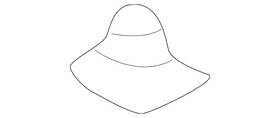
( Manufacturer Part Number: 6818425 ), ( Model: C70-V70 ), ( Part Type: Quarter Panel ), ( Genuine Oem: Yes ), ( Warranty: 1 Year ), ( Fitment Type: Direct Replacement ), ( Year: 1998 1999 2000 2006 2007 2008 2009 2010 2011 2012 2013 ), ( Parts Included: Only Part Reference 4 On The Diagram Is Included )
Review VOLVO Genuine Quarter Trim Panel Retainer fits 1998–2013
The **Volvo 6818425 Quarter Panel Retainer** is a precision-engineered component designed specifically for Volvo vehicles manufactured between the years 1998 and 2013, ensuring a seamless and secure fit for the quarter panel assembly. This retainer plays a critical role in maintaining the structural integrity of the vehicle s bodywork, particularly in the rear quarter section, where it helps hold the panel in place while allowing for proper alignment and flexibility during movement. Crafted from high-quality, durable materials, the retainer is engineered to withstand the rigors of daily driving, including road vibrations, minor impacts, and temperature fluctuations, which can otherwise cause loosening or misalignment over time. Its design incorporates strategic cutouts and contours that match the exact dimensions of Volvo s body structure, ensuring a snug and interference-free installation. Whether used during routine maintenance, bodywork repairs, or aftermarket modifications, this retainer guarantees that the quarter panel remains securely positioned, reducing the risk of rattles, gaps, or misalignment that could compromise both aesthetics and safety. Ideal for mechanics, DIY enthusiasts, and Volvo owners seeking long-term reliability, this part exemplifies Volvo s commitment to precision engineering, offering a straightforward yet essential solution for preserving the vehicle s original integrity.
### **Pros and Cons of Buying a Volvo 6818425 (1998 2013) Quarter Panel Retainer**
#### **Pros:**1. **Reliability and Durability** Volvo s engineering, particularly in the 1990s early 2000s models, is known for strong chassis and structural integrity. The quarter panel retainer is part of a robust body structure designed to withstand collisions.
2. **Aftermarket Availability** Volvo parts, including quarter panel retainers, are widely available from both OEM and aftermarket suppliers. This makes repairs and replacements relatively straightforward.
3. **Compatibility with Classic and Modern Modifications** Many owners of older Volvos (especially the S60, V70, XC90, and older 850/940/960 models) seek retainers for restoration or custom builds. A well-maintained retainer can be repurposed for other projects.
4. **Potential for Restoration or Upcycling** If the retainer is in good condition, it could be used in a full vehicle restoration, a custom build, or even repurposed into a different project (e.g., a hot rod, a show car, or a parts donor).
5. **Lower Cost Compared to New Parts** Purchasing a used retainer is significantly cheaper than buying a new OEM part, making it a budget-friendly option for repairs or modifications.
6. **Historical and Nostalgic Value** For enthusiasts, owning or restoring parts from this era adds a sense of history and craftsmanship, especially if the retainer comes from a well-documented vehicle.
---
#### **Cons:**1. **Potential Rust and Wear** Older Volvo parts, especially those from the late 1990s to early 2000s, may have been exposed to rust, road salt, or poor storage. A thorough inspection is necessary to avoid purchasing a corroded or structurally compromised part.
2. **Fitment Issues** While Volvo parts are generally compatible, slight variations in body styles (e.g., different model years or trim levels) could lead to fitment challenges. The retainer may require adjustments or additional modifications to match perfectly.
3. **Lack of Original Documentation** Without a clear history or documentation, it s difficult to verify the retainer s condition, originality, or whether it has been previously repaired or replaced.
4. **Transportation and Handling Risks** Shipping or transporting a heavy metal part like a quarter panel retainer can be costly and risky. Damage during transit is a possibility, especially if not properly secured.
5. **Limited Warranty or Guarantees** Since this is a used part, there is typically no warranty or return policy. The buyer assumes full responsibility for any defects or issues post-purchase.
6. **Time-Consuming Restoration or Repairs** If the retainer requires welding, painting, or extensive machining to fit, the project could become time-intensive and labor-intensive, especially for those without access to professional fabrication services.
7. **Market Saturation** Depending on the region, there may be an oversupply of used Volvo parts, leading to price fluctuations and potential haggling over value. This can make it harder to negotiate a fair deal.
---
### **Conclusion:**Buying a Volvo 6818425 quarter panel retainer from the 1998 2013 era can be a **cost-effective and practical choice** for restoration projects, modifications, or as a spare part for classic Volvo owners. The part s durability, aftermarket availability, and potential for repurposing make it a valuable asset for enthusiasts. However, the risks of rust, fitment issues, and lack of guarantees mean that buyers must conduct **thorough inspections, verify the part s history, and budget for potential additional work** (e.g., welding, painting, or machining).
For those with **mechanical or welding skills, access to fabrication tools, and patience for restoration**, this retainer could be a worthwhile investment. Conversely, buyers without experience or resources may find it more prudent to purchase a **new or lightly used OEM part** or consult a professional to assess the feasibility of using a used retainer.
---
### **Recommendation:**1. **Inspect Thoroughly** Before purchasing, examine the retainer for rust, dents, or structural weaknesses. If possible, test its fitment on the target vehicle or consult a Volvo specialist for guidance.
2. **Verify Provenance** Ask the seller for details about the retainer s history (e.g., whether it came from a crash, how it was stored, or if it has been previously repaired). A retainer from a known, well-maintained vehicle is preferable.
3. **Budget for Additional Costs** Account for expenses like shipping, welding, painting, or machining if the part doesn t fit perfectly. Factor in labor costs if you lack the skills to perform these tasks yourself.
4. **Compare Prices** Research the market value of similar parts to ensure you re paying a fair price. Consider alternatives like new OEM parts or refurbished retainers if the used option poses too many risks.
5. **Prioritize Practicality Over Nostalgia** If your primary goal is a reliable repair, weigh the pros and cons carefully. If you re restoring a classic car for enjoyment or show purposes, the historical value may justify the effort.
**Final Verdict:** Purchase the retainer **only if** you are confident in its condition, have the means to prepare it properly, and are willing to accept the potential challenges. For most casual buyers or those without restoration experience, a new or certified pre-owned part may be the safer choice.
Details:
Electrical parts are not returnable. Shipping Carrier substitutions may be made at our determination in an attempt to reduce shipping cost the customer. Parts must be resalable and in the original packaging.
part #: 6818425 price
- $13.12
specifications carspeedometeriz:
- for makes: Volvo
- for years: 1998-2013
- mpn: 6818425
- model: C70-v70
- part type: Quarter Panel
- genuine oem: Yes
- warranty: 1 Year
- fitment type: Direct Replacement
- year: 1998 1999 2000 2006 2007 2008 2009 2010 2011 2012 2013
- parts included: Only Part Reference 4 On The Diagram Is Included
general carspeedometeriz:
- condition: New
- Car Truck Parts Accessories > Interior Parts Accessories > Headliners Parts
payments carspeedometeriz:
- other
- credit card: Diners-club
- wallet: Apple-pay
offer carspeedometeriz:
- availability: In Stock
- quantity: 2
- options: Ship-to-home
- sold: 0
- started: February 15, 2026
shipping carspeedometeriz:
- service: Standard, Expedited, Overnight
- cost: $0.00
- transit: 6-11 Days
- class: Standard, Expedited, One-day
- type: Fixed
seller carspeedometeriz:
- # reviews: 684
- rating: 98.6%
- city: Doylestown, Pennsylvania
returns carspeedometeriz:
- paid by: Seller
- policy: Returns Accepted
- time: 30 Days
Volvo 6818425 Is Similar To:
- Speedometer Volvo 380753 Gear Genuine (32.7% similar) Genuine part...(August 16th, 2015)
- 740 Instrument Panel From Volvo Dash Gauge Speedometer (27.8% similar) Instrument panel from a 1986 volvo 740 with B230F engine works no turbo gauge 156K miles...(May 1st, 2018)
- Volvo V70 9148930 Oem Speedometer Instrument 98 Genuine Cluster 1998 S70 Gauges (37.1% similar) Your satisfaction is important to us. Look at photos, part numbers, connectors, and other relevant information prior to order. Free shipping does not extend to any of these areas. They are the same parts that were installed on your vehicle when it was new, guaranteeing proper fit and function...(February 27th, 2015)
- 8551469 Miles Speedo 156958 Preset Genuine Speedometer Volvo (31.4% similar) All accessories listed and pictured in the offer are included as stated. The speedometer has never been used and is preset to miles. You are buying on it in that condition as is. Over 100,000,000 served...(August 17th, 2015)
- Genuine Volvo Sun-visor Support 9165719 (28% similar) Genuine volvo parts. New condition...(June 17th, 2022)
- Genuine Volvo Headliner Clip 9197359 (33% similar) Genuine volvo parts. New condition...(June 17th, 2022)
- Genuine Volvo Headliner Retainer 30819132 (43.1% similar) Genuine volvo parts. New condition...(June 18th, 2022)
- Genuine Volvo Regulator Module Spacer 679904 (28.6% similar) Genuine volvo parts. New condition...(June 18th, 2022)
- Genuine Volvo Ticket Clip 8664428 (29.8% similar) Genuine volvo parts. New condition...(June 27th, 2022)
- Genuine Volvo Headliner Clip 39986970 (32.7% similar) Our volvo parts team is here to help. Genuine volvo parts. New condition...(August 15th, 2022)
- Genuine Volvo Headliner Clip 1385392 (33% similar) Genuine volvo parts. New condition...(August 18th, 2022)