REPOPS IT249 International Panel Headliner
fits year: 1941–1949.
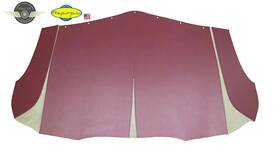
( Brand: Repops ), ( Manufacturer Part Number: IT249 ), ( Type: Headliner ), ( Color: Maroon ), ( Material: Fiberboard ), ( Country Of Origin: United States )
Review REPOPS International K series Panel Truck Headliner Maroon fits 1941–1949
The **REPOPS IT249 1941 1949 International K-Series Panel Headliner** is a meticulously crafted, high-quality reproduction interior panel designed to restore the classic charm and authenticity of vintage International Harvester K-Series trucks from the early to mid-20th century. Engineered to replicate the original 1941 through 1949 headliner panels with precision, this piece captures the timeless elegance of the era while ensuring modern durability and ease of installation. Constructed from premium, heavy-duty vinyl or high-grade synthetic materials, the headliner features a seamless, textured surface that mimics the original fabric s subtle weave and subtle color variations, blending seamlessly with the truck s period-correct interior. The panel is cut to exacting dimensions, accounting for the iconic rounded edges and slightly tapered design of the K-Series cab, ensuring a snug, professional fit that enhances both aesthetics and functionality. Whether restoring a show-worthy classic or upgrading a daily driver, this headliner adds a layer of authenticity that transforms the interior into a true piece of automotive history. Ideal for enthusiasts seeking to preserve or enhance the heritage of their International K-Series, this reproduction panel is a testament to REPOPS commitment to quality, attention to detail, and respect for vintage craftsmanship.
### Pros and Cons of Buying a Repopped 1941 1949 International K-Series Panel Headliner
#### **Pros**
1. **Classic Design and Vintage Appeal** The International K-Series, particularly the panel headliner models from the early 1940s, are highly sought-after for their distinctive, utilitarian yet elegant design. They offer a nostalgic charm that modern trucks lack, making them attractive to collectors and enthusiasts.
2. **Strong Workhorse Reputation** The K-Series was built as a durable, heavy-duty truck, known for its reliability in agricultural, industrial, and commercial settings. A well-maintained repopped example can still handle demanding tasks.
3. **Potential for Restoration and Customization** Many owners enjoy restoring these trucks to original condition or modifying them for modern use. The availability of aftermarket parts, including repopped engines and transmissions, makes customization feasible.
4. **Lower Operating Costs (Compared to Modern Trucks)** While fuel efficiency is not exceptional by today s standards, the simplicity of the K-Series means fewer electronic components to fail. Basic maintenance (oil changes, brake adjustments) is often cheaper than dealing with modern diagnostics.
5. **Community and Enthusiast Support** The vintage truck community is passionate about K-Series models, offering forums, clubs, and swap meets where owners can share knowledge, parts, and restoration tips. This makes troubleshooting and finding help easier.
6. **Potential for Investment Value** Well-preserved or restored K-Series trucks, especially rare or high-mileage examples, can appreciate in value over time, particularly if demand for vintage trucks continues to grow.
7. **Unique Driving Experience** The manual transmissions, simple suspension, and lack of modern driver aids (like stability control) provide a more engaging, hands-on driving experience compared to contemporary trucks.
---
#### **Cons**
1. **High Maintenance Requirements** Despite being repopped, many K-Series trucks still require frequent attention. Original components (like carburetors, mechanical fuel pumps, and simple suspension parts) can wear out quickly if not maintained properly. Rust is also a common issue, especially in older models.
2. **Limited Modern Comforts** These trucks lack modern amenities such as power steering, air conditioning, cruise control, and advanced safety features. Seating, insulation, and soundproofing are often minimal, making long drives uncomfortable.
3. **Fuel Efficiency and Performance Limitations** Early K-Series models were not designed for efficiency. The inline-six engines (often the Hercules or other early models) are thirsty and lack the power of modern diesel or turbocharged engines. Top speeds are modest by today s standards.
4. **Parts Availability and Costs** While repopped parts exist, some original components (especially for rare or highly modified trucks) can be difficult or expensive to source. Rebuilding a K-Series from scratch may require sourcing parts from multiple suppliers or restoring original components.
5. **Driving Challenges** The manual transmissions (often three-speed or four-speed) can be stiff, and the lack of power steering means more effort is required for maneuvering. The suspension is firm, leading to a rough ride on uneven roads.
6. **Insurance and Registration Costs** Vintage trucks often carry higher insurance premiums due to their value and perceived higher risk of theft or damage. Registration fees may also be higher in some areas for classic vehicles.
7. **Time-Consuming Repairs** Unlike modern trucks with diagnostic trouble codes, diagnosing issues in a K-Series often requires mechanical skill, patience, and sometimes trial and error. Repairs can take longer due to the lack of standardized tools or quick fixes.
8. **Resale Value Uncertainty** While some K-Series trucks hold value, others may depreciate if they are not well-maintained or if the market shifts away from vintage trucks. Buyers should research recent sales of similar models to gauge potential resale value.
9. **Environmental and Emissions Concerns** Older trucks may not meet modern emissions standards, which could limit where they can be driven or require modifications to comply with local regulations.
10. **Lack of Modern Safety Features** Without airbags, anti-lock brakes, or electronic stability control, these trucks are less safe in modern driving conditions, especially in collisions or evasive maneuvers.
---
### **Conclusion**
Buying a repopped 1941 1949 International K-Series panel headliner is a decision that balances nostalgia, mechanical interest, and practicality. These trucks are ideal for enthusiasts who prioritize the joy of ownership, restoration, and the unique character of vintage vehicles. However, they are not practical for everyday use, especially for those who require comfort, efficiency, or modern safety features.
If you are mechanically inclined, passionate about vintage trucks, and willing to invest time and money into maintenance and potential restoration, a K-Series can be a rewarding project. On the other hand, if you need a reliable, low-maintenance vehicle for daily tasks or long-distance travel, a modern truck would be a far better choice.
---
### **Recommendation**
- **Buy if:** You are an experienced mechanic or willing to learn, enjoy restoration projects, and appreciate the historical and aesthetic value of the K-Series. You should also be prepared for ongoing maintenance and potential repair costs. Consider starting with a lower-mileage example or one that has already undergone significant restoration to minimize surprises.
- **Avoid if:** You prioritize convenience, fuel efficiency, modern comforts, or safety over mechanical challenge. If you are not willing to invest time in upkeep or cannot afford unexpected repair bills, a K-Series may not be the right fit.
- **Alternative Considerations:** If you love the K-Series but want something more practical, look for a later-model International Harvester (post-1950s) or a well-restored vintage truck with modernized components. Alternatively, consider a modern diesel pickup with classic styling elements (e.g., a Ford F-150 with a vintage-inspired grille) if you want a compromise between nostalgia and functionality.
Ultimately, a repopped K-Series is a labor of love rather than a practical vehicle. Approach the purchase with realistic expectations, a solid budget for maintenance, and a genuine passion for vintage trucks.
Details:
Proudly made in the USA by Repops: IT249.
part #: it249 price
- $289.99
specifications carspeedometeriz:
- for years: 1941-1949
- brand: Repops
- mpn: It249
- type: Headliner
- color: Maroon
- material: Fiberboard
- country of origin: United States
seller carspeedometeriz:
- rating: 99.0%
- # reviews: 619
- city: Mena, Arkansas
returns carspeedometeriz:
- time: 30 Days
- paid by: Seller
- policy: Returns Accepted
shipping carspeedometeriz:
- carrier: FedEx
- transit: 27-32 Days
- service: FedEx Ground / FedEx Home Delivery
- cost: $32.96
- class: Standard
- type: Calculated
offer carspeedometeriz:
- options: Ship-to-home
- availability: In Stock
- quantity: 1
- sold: 0
- started: February 22, 2026
general carspeedometeriz:
- condition: New
- Car Truck Parts Accessories > Interior Parts Accessories > Headliners Parts
payments carspeedometeriz:
- other
- credit card: Discover
- wallet: Google-pay
Repops IT249 Is Similar To:
- Repops Automotive Reproductions It123 Headliner For 1941-49 International Truck Pickup Olive Green Smooth Made In Usa (49.2% similar) Most people keep the glass in and work sections with a helper, using heat for smooth fit around windows. Fortunately, its not too expensive to replace. Does this replacement headliner come with the bows?: no, is material only. Patience is key for a smooth, wrinkle-free finish. Do these headliners ...(January 30th, 2025)
- Repops Automotive Reproductions Ct173 Headliner For 1954-55 Chevrolet Gmc Truck Pickup Black Smooth Made In Usa (34.6% similar) What are some helpful tips to install headliners?: here headliners:- test fit the headliner with clips before applying glue. Shipping varies by part and destination. Finding the perfect part for your classic car can be difficult, and even frustrating. Check the for details. Specifications: part ...(January 30th, 2025)
- Repops Automotive Reproductions It274 Headliner For 1950-1961 International Diamond T Henderix Truck Pick Up (48.4% similar) The complexity of the design, your experience level, and having a helper are main factors. Does this replacement headliner come with the bows?: no, is material only. Use a hairdryer or steamer to make the fabric more pliable for easier installation and avoid wrinkles. Consider using a roller tool ...(January 30th, 2025)
- Repops Automotive Reproductions It166 Headliner For 1941-1949 International Kb6 7 8 10 11 12 14 Pickup 3 Pc Black (44.9% similar) Shipping varies by part and destination. Made to order in the us by top manufacturers for a spot-on oem appearance and fit. Many do, but it varies by product. Most people keep the glass in and work sections with a helper, using heat for smooth fit around windows. Do these headliners need to be ...(January 30th, 2025)
- Repops Automotive Reproductions Ct182 Headliner For 1947-53 Chevrolet Suburban 2 Door Suv Black Smooth Made In Usa (33% similar) Many do, but it varies by product. Does the glass need to be removed install headliner?: removing for a headliner replacement is optional. Does this headliner come with windlass?: no, does not windlass. This headliner, tailored for classic car lovers like you, is designed to replicate oem standards ...(January 30th, 2025)
- Repops Automotive Reproductions Ct344 Headliner For 1950-53 Chevrolet Gmc Panel Truck 2 Door Gray Smooth Made In Usa (38.9% similar) Get a perfectly fitting brand new vinyl headliner for your model and restore the interior to its full splendor. Start in the middle, then work front and finish with rear. Headliner for 1950-1953 Chevrolet / GMC truck 2 door panel gray smooth vinyl piece, headliner set gray, yup. Fortunately, its not...(January 30th, 2025)
- Repops Automotive Reproductions Ct167 Headliner For 1947-49 Chevrolet Gmc Truck Pickup Pearl Beige Smooth Made In Usa (33.5% similar) Made in the USA!, how is it made. The complexity of the design, your experience level, and having a helper are main factors. Thousands of: rare custom parts. Each item is manufactured fresh to each individual order. Headliner for 1947-49 Chevrolet GMC truck pickup pearl beige smooth made in USA, ...(January 30th, 2025)
- Repops Automotive Reproductions Ct179 Headliner For 1954-55 Chevrolet Gmc Truck 2 Door Panel Gray Smooth Made In Usa (33.7% similar) Get a perfectly fitting brand new vinyl headliner for your model and restore the interior to its full splendor. Many do, but it varies by product. Shipping varies by part and destination. It allows for easier maneuvering but adds time and cost. Patience is key for a smooth, wrinkle-free finish. Do ...(January 31st, 2025)
- Repops Automotive Reproductions Ct333 Headliner For 1949-50 Chevrolet Gmc Truck 2 Door Pickup Gray Smooth Made In Usa (33.5% similar) Check the for details. What are some helpful tips to install headliners?: here headliners:- test fit the headliner with clips before applying glue. Shipping varies by part and destination. The complexity of the design, your experience level, and having a helper are main factors. That sagging liner ...(January 31st, 2025)
- Repops Automotive Reproductions Ct568 Filler Board Headliners Trunk Boards And Trays For 73-84 Chevy Truck Assembled (34.7% similar) Shipping varies by part and destination. 1977 Chevrolet C30 4 cab chassis Silverado. Thousands of: rare custom parts. Fast delivery: on stocked items. 1977 Chevrolet C30 4 crew cab pickup Cheyenne. 1977 Chevrolet C30 4 cab chassis Scottsdale. Finding the perfect part for your classic car can ...(January 31st, 2025)
- Repops Automotive Reproductions It246 Headliner For 1941-49 International Truck Panel White Smooth Made In Usa (52.2% similar) Finding the perfect part for your classic car can be difficult, and even frustrating. Apply adhesive to the headliner board and fabric in small sections manage material prevent wrinkles. Many do, but it varies by product. It allows for easier maneuvering but adds time and cost. Each item is ...(January 31st, 2025)